Community Advisory Boards: How to Set One Up and Share Real Decisions With It
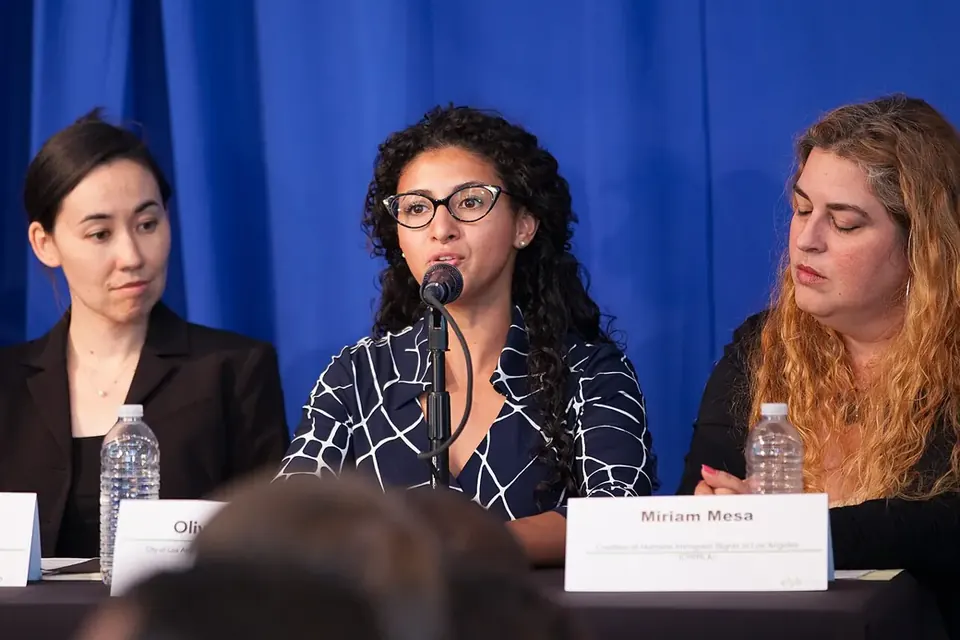
Community advisory boards are the most common way for research projects to give a community a formal voice. Some boards shape every stage of a study; others meet twice a year to hear progress reports and are thanked in the acknowledgements. The difference is rarely goodwill. It comes from decisions taken at the start: what the board is for, who sits on it, what it can decide, and how its members are supported.
What a community advisory board is
A community advisory board (CAB) is a standing group of community members and community organisations that works alongside a research team. Boards are sometimes called steering groups, community panels, lived experience panels or reference groups; in health research in the UK, similar groups are often described as public involvement or patient and public involvement (PPI) groups, covered in our guide to public involvement in health research.
The most widely cited synthesis of practice, by Susan Newman and colleagues at the Medical University of South Carolina, describes CABs as a way of formalising academic–community partnerships so that community members have representation in research activities (Newman et al., Preventing Chronic Disease, 2011). The authors list functions that boards commonly take on: advising on study design and procedures, helping with community consent, weighing and explaining the risks and benefits of the research, reviewing education materials, sharing results and using findings to argue for policy change. They also note a caution that is easy to forget: not every community-based project has used a CAB, and boards have not succeeded in every setting.
Advisers or partners: settle it first
Newman and colleagues draw a distinction that shapes everything else. Members in an advisory role provide information, guidance and suggestions, and the research team may accept or reject them. Members in a partnering role bring issues from the community to the table, and the board resolves them in a way that benefits both the community and the research team. The two sit at different points on what the authors call the partnership power gradient.
Neither role is wrong, but pretending one is the other causes damage. A board told it is a partner, then overruled on the questions it cares about, will lose trust quickly. Typologies such as Arnstein's ladder of participation are useful here: a board that is consulted but has no influence over decisions sits on the lower rungs, however warm the meetings. If the funder or the protocol fixes certain decisions in advance, say so, and say which questions remain open to the board.
Who should sit on the board
Membership follows from purpose. The Newman synthesis recommends setting inclusion criteria that reflect the goals of the research and the board's functions, and building the list through repeated brainstorming with the whole team about which kinds of expertise and resources are needed. New partnerships, it suggests, can start small, with a few community organisations that are well regarded locally, and widen later.
The three boards the authors describe illustrate the range. A six-member board for a photovoice study with people who use wheelchairs was made up of people with spinal cord injury and the director of a disability advocacy organisation. A smoking-cessation programme in public housing began with a five-member working group of local residents and later formed an eight-member board that included housing authority officials and community organisations. A diabetes coalition added members only by invitation of a partner and approval by 70% of current members.
Some practical questions help with recruitment:
- Lived experience. Are people directly affected by the issue on the board, not only professionals who serve them?
- Several voices. Is any member expected to represent a whole group on their own? Two or more people from the same community share the load and make disagreement possible.
- Gatekeepers. Leaders of organisations bring reach, but they do not always speak for the people least heard within a community. Look for ways to include them too.
- Conflicts of interest. An organisation that hopes to deliver the intervention, or that competes for the same funding, may have interests to declare.
Terms of reference
A short written document, agreed with members rather than handed to them, prevents many later disputes. It usually covers:
- the purpose of the board and the decisions it takes, advises on or is simply informed about;
- membership, length of terms, how new members join and how members can leave;
- how meetings are chaired (ideally by, or jointly with, a community member) and how decisions are reached;
- confidentiality, especially when the board sees unpublished data or draft findings;
- payment and expenses;
- authorship and acknowledgement in reports and papers;
- what happens to the board, and to data and products, when the project ends.
Where a university and community organisations sign a formal agreement, the board's role should be consistent with it. Our guide to community-university partnership agreements covers what such a memorandum usually contains.
Running meetings that work for members
Practical details decide who can take part. Evening or weekend meetings may suit working members better than office hours; a community venue may feel more comfortable than a university room. Childcare, transport, food, interpreters, accessible rooms and an online option all widen the circle. Papers sent a week ahead, in plain language, let members prepare.
Researchers should also report back. A board that never hears what was done with its advice will stop giving it. A simple "you said, we did" log, kept from meeting to meeting, makes the board's influence visible and shows where its advice was not followed, and why.
Paying members fairly
Board members give time, knowledge and often emotional effort. Public involvement guidance from research funders, such as the payment guidance of the UK's National Institute for Health and Care Research (NIHR), treats paying people for their time as normal practice, alongside reimbursing expenses, ideally in advance so that members are not out of pocket. Payment can interact with welfare benefits and tax, so members should get clear information before they agree. The options and pitfalls are set out in our guide to paying community researchers and participants.
Evaluating the board, and keeping it alive
Newman and colleagues group the life of a board into formation, operation and maintenance, and stress that the stages are cyclical rather than linear: an evaluation may send a board back to rethink its membership or its rules. Evaluation can be light. A yearly discussion or anonymous questionnaire asking whether members feel heard, which decisions they influenced and what should change gives the team something to act on.
The hardest moment is the end of a grant. Boards that have built trust over years can disappear when the money stops, leaving communities with the sense of having been used. Options include agreeing at the outset what will happen, seeking bridge funding, handing the board to a community organisation, or linking it to a longer-term research centre, as the South Carolina centre did with its own 20-member board. Whatever the choice, members should hear about it early, not at the last meeting.
Warning signs
- The board is formed after the research question and design are fixed, so that only recruitment and dissemination are left to discuss.
- Meetings consist mainly of progress reports.
- The same one or two members are asked to speak for "the community" in every forum.
- Members learn about results from the press or a published paper.
- The board appears in the grant application and the final report, but nowhere in between.
None of these is fatal if it is noticed and discussed openly. A board's value lies less in its existence than in the decisions it changes, which is also what the principles of community-based participatory research ask of every partnership.
Sources
- Susan D. Newman, Jeannette O. Andrews, Gayenell S. Magwood, Carolyn Jenkins, Melissa J. Cox and Deborah C. Williamson, "Community advisory boards in community-based participatory research: a synthesis of best processes", Preventing Chronic Disease, vol. 8, no. 3, A70, 2011.
- Sherry R. Arnstein, "A ladder of citizen participation", Journal of the American Institute of Planners, vol. 35, no. 4, 1969.
- Barbara A. Israel, Amy J. Schulz, Edith A. Parker and Adam B. Becker, "Review of community-based research: assessing partnership approaches to improve public health", Annual Review of Public Health, vol. 19, 1998.
 Ethics & partnerships
Writing a community-university partnership agreement
Governance, money, data, authorship and exit: the clauses that keep research partnerships between universities and community groups fair.
 Methods
The principles of community-based participatory research
The nine principles behind CBPR, what they ask of researchers and community partners, and how to tell real partnership from research that is merely located in a community.
 Ethics & partnerships
Paying community researchers fairly
Participants, public contributors and co-researchers: how to pay people fairly, avoid benefit and tax problems, and get university systems to cooperate.