Decolonising Food Systems in Europe: What the Research and the Debates Say
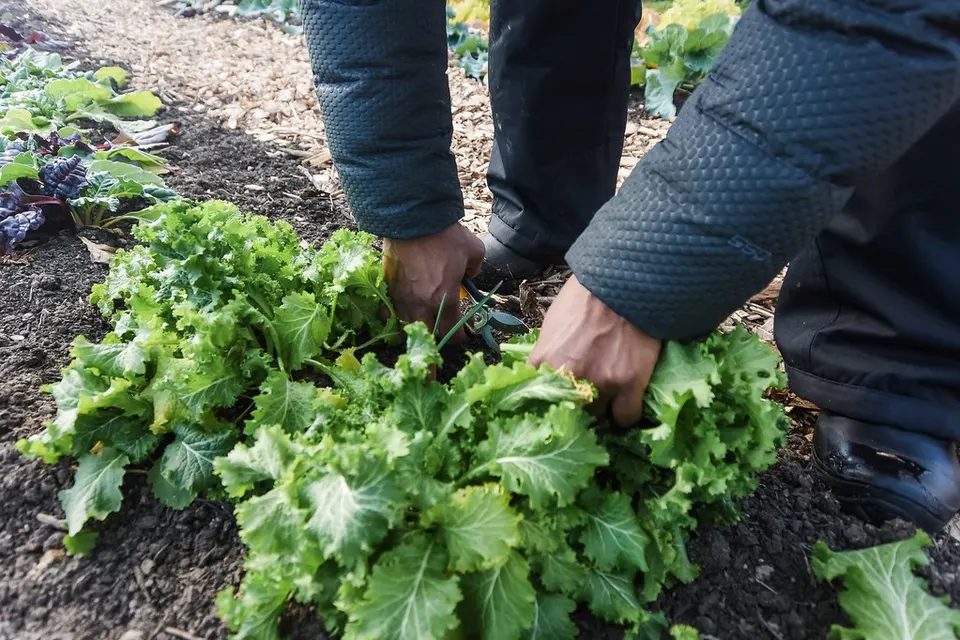
"Decolonising food" can sound like a slogan imported from elsewhere. In Europe it has become a serious strand of research and activism, linked to the food sovereignty movement and to participatory research with farmers, migrants and communities of colour. This review sets out where the idea comes from, what researchers mean by it in a European context, the main debates, and what it asks of people who do research on food.
From food security to food sovereignty
Official food policy has long spoken the language of food security: enough food, available and affordable. Food sovereignty, a term championed by the international peasant movement La Via Campesina from the 1990s, asks a different question: who decides how food is produced, and for whom. La Via Campesina presents it as a political framework built by small-scale producers rather than a technical target.
The most quoted definition comes from a gathering of social movements in the village of Nyéléni, near Sélingué in Mali, in February 2007. The Declaration of Nyéléni was signed by more than 500 representatives from more than 80 countries, and defines food sovereignty as "the right of peoples to healthy and culturally appropriate food produced through ecologically sound and sustainable methods, and their right to define their own food and agriculture systems". Its last lines on social relations already contain the seed of the decolonial argument: food sovereignty "implies new social relations free of oppression and inequality" between peoples and racial groups as well as between men and women.
Bringing food sovereignty to Europe: Krems 2011
For a movement born largely in the Global South, Europe was an awkward setting. The European Union is a major food exporter, its Common Agricultural Policy shapes markets far beyond its borders, and many of its farms are tied to global supply chains for feed and inputs. In August 2011, the first European forum for food sovereignty met in Krems, Austria. According to its final declaration, "Food Sovereignty in Europe Now!", more than 400 people from 34 European countries met from 16 to 21 August, building explicitly on the Nyéléni declaration of 2007.
The Krems text criticises a food system "controlled by a few transnational food corporations together with a small group of huge retailers" and names the Common Agricultural Policy among the policies responsible. It also commits signatories to free movement of people and to gender equality, which matters for the debates that followed: European food sovereignty was framed from the start as more than defending local farmers.
What "decolonising" means in a European food system
Researchers who use the term in Europe generally mean one or both of two things.
The colonial roots of what Europe eats. Sugar, coffee, cocoa, tea, spices and later soy for animal feed reached European tables through plantation economies and unequal trade. Scholars of food sovereignty argue that these patterns did not end with formal independence. In an influential article, Sam Grey and Raj Patel argued that food sovereignty is itself a continuation of anti-colonial struggles, drawing on Indigenous movements in North America to show where the concept rubs against settler-colonial realities (Grey and Patel, 2015, Agriculture and Human Values).
Whose knowledge counts. The second sense concerns knowledge. Agricultural modernisation treated scientific and commercial knowledge as superior to the experience of farmers, and especially of peasant, Indigenous and migrant food producers. A 2025 article in the Journal of Rural Studies by L. Lecuye, S. Calla, Brendan Coolsaet, I. Rodriguez and J. C. Young applies decolonial theory to European farmers themselves. Its abstract lists the "devaluation of traditional farming knowledge", economic dependence on industrial inputs and limited political agency among the forms of marginalisation, and draws parallels with the struggles of Indigenous peoples in Latin America.
Concentration on the land
Debates about decolonising food in Europe often return to land: who holds it and who can get access to it. Official statistics show how fast the structure of farming has changed. Eurostat counted 9.1 million farms in the EU in 2020, an estimated 5.3 million fewer than in 2005, a decline of about 37%. The loss was sharpest among mixed farms, which combine crops and livestock.
Access to land is also unequal along lines of race and class. In Britain, the London-based collective Land In Our Names works for land justice for Black and People of Colour, framing its work as reparations for "colonial-rooted" dispossession. Citing Natural England, it states that people of colour in Britain are 60% less likely to be able to access green space and natural environments than white people.
Commons, localism and its blind spots
A chapter by Tomaso Ferrando, Priscilla Claeys, Dagmar Diesner, José Luis Vivero Pol and Deirdre Woods, published in 2021 in the Routledge book Resourcing an Agroecological Urbanism, argues for "de-colonising and de-commodifying" Europe's food system. The record at Coventry University summarises its approach as one that recognises "the colonial, patriarchal, and capitalist roots" of the food chains that feed Europe, and promotes the commons. The chapter credits the UK's Landworkers' Alliance and the collective proposal "A People's Food Policy" with broadening public debate.
The same chapter raises a warning that recurs across the literature: the Global North food sovereignty movement "leans strongly towards 'the local' and often excludes 'the Other'". Celebrating local food can slide into defending a rural identity that has little room for migrant farmworkers, for diaspora food cultures or for people who cannot afford farmers' market prices. Researchers working with movements have made a similar point about strategy. Colin Anderson of Coventry University, writing in 2019, warned that framing change around "local food", rather than "a more radical concept like 'food sovereignty'", can let powerful actors depoliticise the debate; his essay on knowledge mobilisation pointed to the discussion on decolonising food sovereignty in Europe that once appeared at this web address.
Where the debates are unresolved
- Is "decolonising" the right word in Europe? Some authors, following Indigenous scholars, insist that decolonisation means returning land and authority to colonised peoples and should not become a metaphor for any reform. Others use it more broadly for challenging colonial patterns of knowledge and trade. Readers should check which sense a text uses.
- European farmers as victims or beneficiaries? Comparing the marginalisation of European farmers with Indigenous oppression, as the 2025 Journal of Rural Studies article does, is contested: European agriculture also benefits from subsidies and trade rules that disadvantage producers elsewhere.
- Local versus global solidarity. Food sovereignty movements continue to debate how to support local producers without closing borders to people or ideas.
What this means for participatory research on food
For researchers, the decolonial critique overlaps closely with the concerns of participatory action research and of the 2016 book People's Knowledge and Participatory Action Research. In practice it suggests:
- working with farmers, farmworkers and eaters as co-researchers who shape the questions, as in co-produced research;
- including migrant workers and diaspora communities rather than treating "local" as the only legitimate food culture;
- recognising collective rights over data and knowledge, an idea developed in Indigenous data sovereignty;
- being explicit about where the money for research comes from and who will use the results;
- following the debate as it develops: Frontiers in Sustainable Food Systems has opened a research topic on decolonising food systems research and governance, with "epistemic justice and knowledge sovereignty" in its title.
Sources
- Forum for Food Sovereignty (2007). Declaration of Nyéléni. Sélingué, Mali, 27 February 2007.
- Nyéléni Europe (2011). Food Sovereignty in Europe Now! Declaration of the European Forum for Food Sovereignty. Krems, Austria.
- La Via Campesina (n.d.). Food sovereignty.
- Grey, S. and Patel, R. (2015). Food sovereignty as decolonization: some contributions from Indigenous movements to food system and development politics. Agriculture and Human Values, 32(3), 431–444. doi:10.1007/s10460-014-9548-9.
- Lecuye, L., Calla, S., Coolsaet, B., Rodriguez, I. and Young, J. C. (2025). Empowering European farmers: insights from decolonial theory and Indigenous people in Latin America. Journal of Rural Studies, 117, 103651. University of East Anglia record.
- Ferrando, T., Claeys, P., Diesner, D., Vivero Pol, J. L. and Woods, D. (2021). Commons and commoning for a just agroecological transition: the importance of de-colonising and de-commodifying our food system. In C. Tornaghi and M. Dehaene (eds), Resourcing an Agroecological Urbanism. Routledge. Coventry University record.
- Eurostat (2023). EU farms: 5.3 million fewer in 2020 than in 2005.
- Land In Our Names (2024). About us.
- Anderson, C. (2019). Three knowledge mobilization strategies. Resilience.org.
 Co-production
 of knowledge, explained
From Elinor Ostrom to NIHR guidance and sustainability science: what co-production really requires, and how to tell it from consultation.
 Participatory methods
Participatory action research, step by step
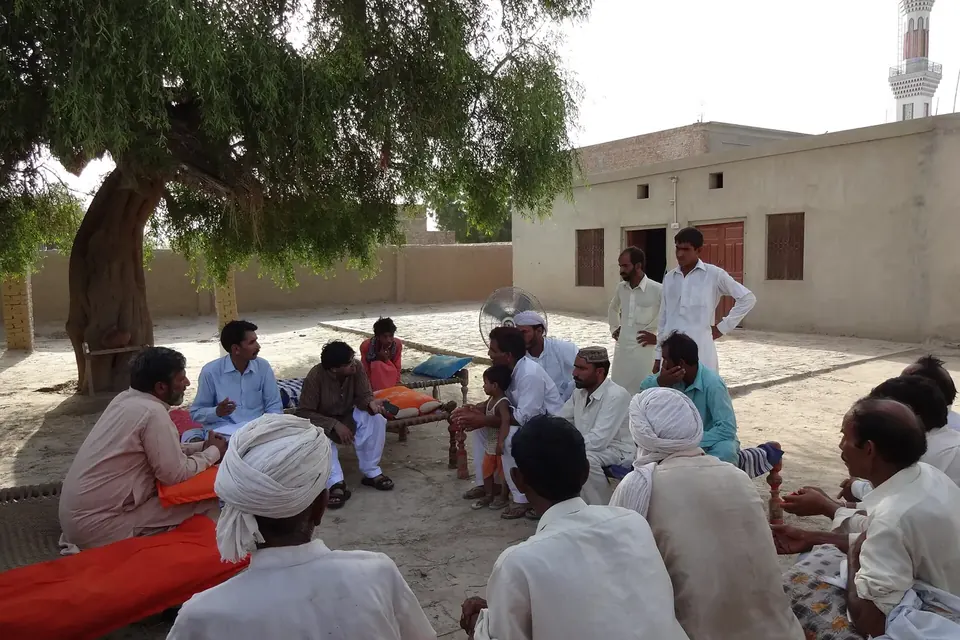
From Kurt Lewin and Orlando Fals-Borda to today's community projects: the PAR cycle, team roles and the traps to avoid.
 Citizen science
Indigenous data sovereignty and the CARE principles
CARE alongside FAIR, OCAP in Canada, the Havasupai case and practical steps for researchers working with Indigenous data.