Participatory Action Research: Origins, the Research Cycle and How to Run a Project
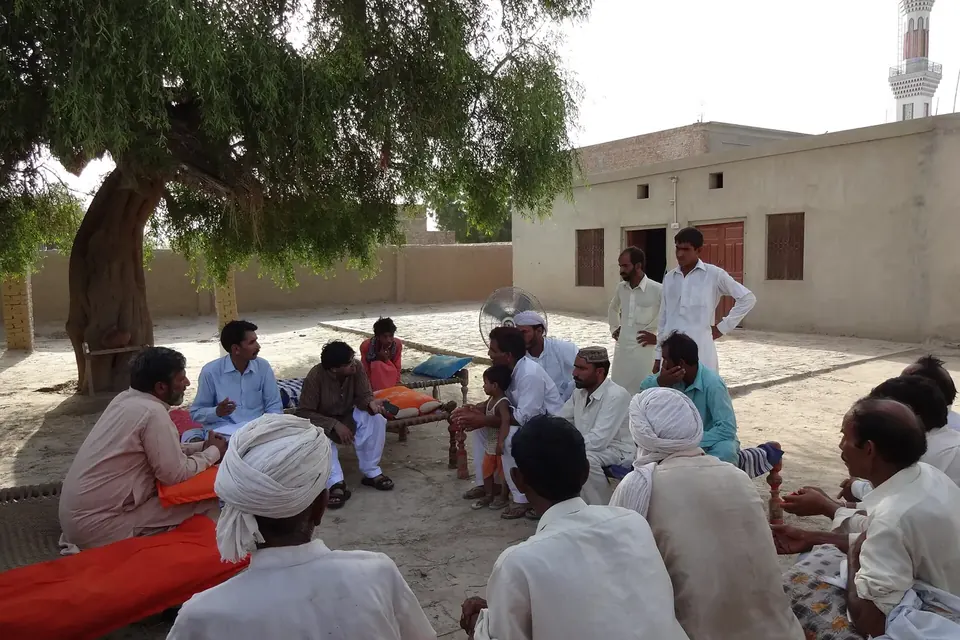
Participatory action research, usually shortened to PAR, is research done with people rather than on them, with the explicit aim of changing the situation being studied. The people affected by a problem take part in defining the questions, gathering and interpreting evidence, and deciding what to do with it. This guide explains where the approach comes from, how a PAR cycle works, and what tends to go wrong.
Where participatory action research comes from
The phrase "action research" is generally traced to the German-American social psychologist Kurt Lewin, whose 1946 article "Action Research and Minority Problems", published in the Journal of Social Issues, described research that leads to social action, organised as "a spiral of steps, each of which is composed of a circle of planning, action, and fact-finding about the result of the action". Lewin worked on intergroup relations and workplace change, and his teams tested changes in real settings rather than in the laboratory.
The "participatory" part came later and largely from the global South. The Brazilian educator Paulo Freire, whose Pedagogy of the Oppressed was first published in English in 1970, argued that people learn and act most effectively when they analyse their own reality together, through dialogue rather than instruction. In Colombia, the sociologist Orlando Fals-Borda worked with peasant and fishing communities on the Caribbean coast and became one of the best-known advocates of what he called investigación-acción participativa. A world symposium on action research held in Cartagena, Colombia, in 1977 is often cited as a moment when these strands came together internationally.
In parallel, development practitioners such as Robert Chambers at the Institute of Development Studies in the UK popularised participatory rural appraisal in the late 1980s and 1990s, a toolkit of visual and group methods (maps, seasonal calendars, ranking exercises) that made it easier for people without formal schooling to lead parts of an inquiry. Public health researchers in North America developed community-based participatory research, a close cousin with its own set of principles.
What makes research "participatory action research"
There is no single official definition, but most textbooks and university guides agree on a few features:
- The question starts with the people concerned. A problem is named by a community, a group of workers or service users, not imported ready-made by a funder or a researcher.
- Participants are co-researchers. They help design instruments, collect data, analyse it and present it, and they are trained and supported to do so.
- Knowledge is tied to action. The project is judged partly on what changes: a policy, a service, a practice, the group's own capacity to organise.
- Reflection is built in. The group regularly stops to ask what it has learnt, including about its own power relations.
Not every project that involves the public meets this bar. Consulting residents through a single survey, or inviting a community representative to an advisory board, is useful but is not PAR. Sherry Arnstein's "ladder" and later typologies, explained in our article on levels of participation, help teams be honest about where they really stand.
The PAR cycle in practice
Most guides present PAR as a cycle that repeats until the group is satisfied, or the funding ends. In a real project the stages overlap, but the sequence below is a reasonable plan.
- Build the group and agree on the problem. Hold open meetings, listen before proposing, and agree a question the group cares about and can realistically investigate. Write down who is in the core team, how decisions will be taken and how people will be paid or compensated for their time.
- Plan the inquiry. Decide what evidence would answer the question: existing statistics, interviews, a door-to-door survey, observation, photographs, mapping. Choose methods the co-researchers can use with confidence after training. Settle ethical questions now, including consent and data storage.
- Act and collect. Gather the data, often in pairs that combine a community member with a university researcher or trained volunteer. Keep a shared log of what was done, where and by whom.
- Observe and analyse together. Hold analysis workshops where the whole group sorts quotes, reads charts and argues about interpretations. Visual methods such as sorting cards on a wall make it easier for everyone to take part.
- Reflect and decide. Ask what the evidence means, what action follows, and what the group would do differently next time. The action itself (a meeting with a council, a new service, a public exhibition) then becomes the starting point of the next cycle.
Many PAR projects use creative methods inside this cycle. Photovoice, in which participants photograph their surroundings and discuss the pictures, and participatory mapping are two of the most widely documented.
Housing is one of the most common subjects. Tenants' associations frequently apply the same cycle to damp, repairs and rents, and our guide to researching housing conditions with residents walks through each stage.
Roles in a PAR team
A typical team brings together three kinds of people, sometimes overlapping:
- Community co-researchers, who bring lived experience, local knowledge and access. They should be paid for their time where possible; our article on paying community researchers covers the practical issues.
- Academic or professional researchers, who bring methodological training, access to literature and often the grant. Their job includes making methods usable and protecting the rigour of the evidence.
- A facilitator or coordinator, who keeps meetings inclusive, manages the schedule and the budget, and notices when some voices dominate.
Write these roles down. Many partnerships between universities and community organisations now use a short written agreement covering decision-making, money, data ownership and authorship.
Rigour: is PAR "real" research?
A common objection is that research done by non-specialists, with an agenda for change, cannot be objective. PAR practitioners answer in two ways. First, the usual tools of rigour still apply: clear questions, transparent methods, systematic data collection, triangulation between sources and honest reporting of limits. Second, involving the people concerned often improves validity. Residents know which survey questions will be misunderstood, which places matter, and which explanations ring false. The test is whether another reader can follow how the group moved from data to conclusions.
Quality criteria proposed for action research typically include the relevance of the question to participants, the quality of the participation itself, the soundness of the methods, and the usefulness of the outcomes. Peter Reason and Hilary Bradbury's Handbook of Action Research (Sage, first edition 2001) is the standard academic reference on these debates.
Common pitfalls
- Tokenism. Community members are invited to meetings but every important decision has already been taken.
- Extraction. The university collects data, publishes papers and leaves; the community never sees the results.
- Burnout. Unpaid volunteers carry the fieldwork for months. Projects that last longer than the first enthusiasm usually budget for people's time.
- Timelines that do not fit. Grants run on fixed schedules; trust and action do not. Build in time at the start, before data collection.
- Ethics review designed for other research. Committees may be unfamiliar with co-researchers or with research questions that evolve. Explain the design early and plan for amendments.
Where to learn more
Many universities publish free introductory guides. The National Co-ordinating Centre for Public Engagement in the UK hosts guidance on community-university research, including the ethical principles for community-based participatory research produced with Durham University's Centre for Social Justice and Community Action. Classic texts include Freire's Pedagogy of the Oppressed, Fals-Borda and Rahman's edited volume Action and Knowledge: Breaking the Monopoly with Participatory Action-Research (1991) and Chambers' Whose Reality Counts? Putting the First Last (1997).
Sources
- Kurt Lewin, "Action Research and Minority Problems", Journal of Social Issues, vol. 2, no. 4, 1946, pp. 34-46.
- Paulo Freire, Pedagogy of the Oppressed, English translation, Herder and Herder, 1970.
- Orlando Fals-Borda and Muhammad Anisur Rahman (eds.), Action and Knowledge: Breaking the Monopoly with Participatory Action-Research, Apex Press, 1991.
- Robert Chambers, "The origins and practice of participatory rural appraisal", World Development, vol. 22, no. 7, 1994, pp. 953-969.
- Peter Reason and Hilary Bradbury (eds.), Handbook of Action Research, Sage, 2001.
 Methods
The principles of community-based participatory research
The nine principles behind CBPR, what they ask of researchers and community partners, and how to tell real partnership from research that is merely located in a community.
 Methods
Photovoice, step by step
Cameras, group discussion and an exhibition for decision-makers: how to run a photovoice project, from training to ethics.
 Methods
Arnstein's ladder and other participation typologies
Eight rungs from manipulation to citizen control, and the newer models that help research teams say honestly how much power they share.