Volunteer Water Quality Monitoring: How Community Groups Produce River Data Agencies Can Use
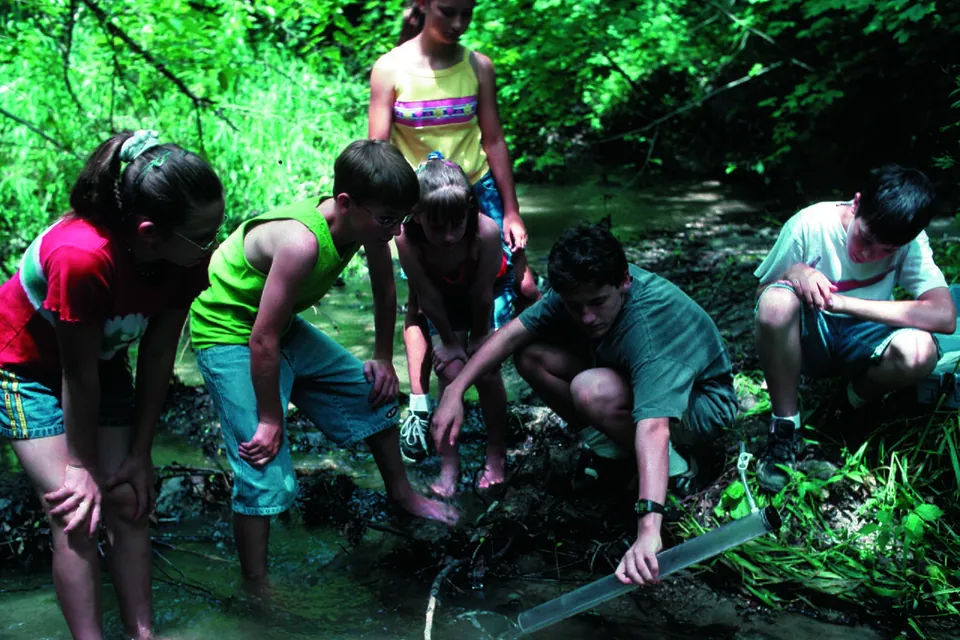
Rivers are long and pollution is intermittent. A regulator that samples a stretch of river a few times a year can easily miss a slurry spill, a misconnected drain or a failing septic system. Residents who walk the same bank every week will not. That is the basic case for volunteer water monitoring, and it is one of the oldest forms of citizen science. The harder question is how to turn a bucket, a net and a test kit into data that an environmental agency will accept. This guide explains the main approaches and the quality systems behind them.
What volunteers measure
Most volunteer programmes combine several kinds of observation, because each catches different problems.
- Physical and chemical measurements. Water temperature, pH, dissolved oxygen, electrical conductivity, turbidity and nutrients such as nitrate and phosphate can all be measured with handheld meters, colour-change test kits or simple devices like a turbidity tube. They give a precise picture of the moment of sampling, but little about what happened the day before.
- Biological indicators. Freshwater invertebrates (the larvae of mayflies, stoneflies and caddisflies, freshwater shrimps, snails, worms) differ widely in how much pollution they tolerate. Which groups are present, and in what numbers, reflects water and habitat quality over a longer period.
- Visual and outfall surveys. Discoloured water, foam, sewage fungus, dead fish, or a pipe discharging in dry weather are all reportable observations that need no equipment beyond a phone camera and a clear protocol for recording place and time.
Some projects also collect samples for laboratory analysis, for example bacteria at bathing sites. That adds cost and logistics (chain of custody, cool boxes, delivery times), but produces numbers directly comparable with official ones.
Riverfly: invertebrates as an early warning
The best-documented volunteer biological scheme in the UK is the Anglers' Riverfly Monitoring Initiative, run under the umbrella of the Riverfly Partnership and launched in 2007. Its method is deliberately simple. Trained volunteers take a standard three-minute kick sample at a fixed site: they disturb the riverbed upstream of a net held against the current, so that dislodged animals are carried into it. They then count eight indicator groups of pollution-sensitive invertebrates, usually once a month.
Counts are not reported as raw numbers. Each group is scored from 1 to 4 on a logarithmic abundance scale, and the scores are added up to give a site score. For each site, the Environment Agency sets a trigger level. If a monthly score falls below it, the drop is treated as a possible pollution incident and reported to the agency, which can send its own staff to investigate (Freshwater Biological Association, "Riverfly monitoring: a citizen scientist's view from the River Cray").
The design has three strengths worth copying. The protocol is short and identical everywhere, so results from different volunteers can be compared. The indicator groups are chosen to be identifiable after a day's training, rather than at species level. And the link to a regulator is built in from the start: volunteers know in advance what happens when a score crosses a line, and the agency has agreed to act on it.
The same source also shows the limits. A volunteer monitor on the River Cray, in south-east London, notes that trigger levels can be set unrealistically high for a site, so that natural variation produces "breaches" that have nothing to do with pollution. A trigger is a negotiated threshold, not a law of nature, and it should be reviewed as data accumulate. An extended version of the method, with many more invertebrate groups, exists for volunteers who want to go further.
Quality assurance project plans: writing down how you work
In the United States, volunteer monitoring has a long tradition, and with it a specific document: the quality assurance project plan, or QAPP. The US Environmental Protection Agency published The Volunteer Monitor's Guide to Quality Assurance Project Plans in 1996 precisely because agencies were sceptical of volunteer data. The guide presents the QAPP as the key tool for overcoming that scepticism: a written description of what the project measures, why, and how it makes sure the results are sound. Projects funded by the EPA must have an approved plan before sampling begins; the guide encourages others to write one anyway if state or local managers are expected to use their data (US EPA, The Volunteer Monitor's Guide to QAPPs).
A full plan has many possible elements, and the guide is explicit that not every project needs all of them. In practice, the core is short:
- The question and the data users. Who will use the results, and for what decision? Screening for problems needs less precision than data used to list a river as impaired.
- Sites and timing. Where samples are taken, how sites are marked, and how often. Fixed sites sampled regularly are worth more than many sites sampled once.
- Methods. Step-by-step standard operating procedures for each measurement, including the equipment used and how it is calibrated.
- Quality control. Duplicate samples, blanks, checks of meters against standard solutions, and periodic comparison of volunteer results with a professional or laboratory measurement at the same place and time.
- Training and records. Who has been trained in what, how data sheets are filled in, checked and stored, and what happens to a result that looks wrong.
Some states have reduced the burden by offering generic plans that local groups can adopt. Whatever the format, the logic is the same as in the data quality strategies described in our guide to data quality in citizen science: decide in advance what "good enough" means, and keep the evidence that you met it.
Designing a project that will be taken seriously
Experience from these schemes suggests a few practical rules for any group starting out.
- Talk to the data user first. If you hope the regulator, the water company or the local authority will act on your results, ask them which methods and formats they can accept before buying equipment.
- Prefer one robust method to many weak ones. A monthly invertebrate count done properly at five sites is more useful than a dozen parameters measured irregularly.
- Calibrate and record it. An uncalibrated meter produces numbers that look precise and mean little. Log every calibration with the date and the person who did it.
- Agree what happens when something looks wrong. Volunteers should know whom to call about a pollution incident, and should not be expected to enter polluted water or confront anyone.
- Plan how results will be shared. Decide who owns the data, where they will be published and under what licence, as discussed in our article on open and community data.
Safety matters too. Rivers can rise quickly, banks collapse and polluted water carries health risks. Established schemes require training, work in pairs and set conditions under which sampling is called off.
Why it matters beyond the data
Volunteer water monitoring sits on the contributory side of citizen science, as described in what is citizen science?: the protocol is set centrally and volunteers collect the data. But many groups go further. Once they know their river, they start asking their own questions about a particular outfall or a stretch that never recovers, and the project becomes closer to community-led research. The parallel with residents measuring the air they breathe is close, and many of the same lessons apply; see our guide to community air quality monitoring. In both cases the measurements gain weight when the methods are written down, the quality checks are visible and the link to the people who can act is agreed before the first sample is taken.
Sources
- Freshwater Biological Association, "Riverfly monitoring: a citizen scientist's view from the River Cray", consulted 20 November 2026.
- US Environmental Protection Agency, The Volunteer Monitor's Guide to Quality Assurance Project Plans, EPA 841-B-96-003, September 1996, consulted 20 November 2026.
- Riverfly Partnership, description of the Riverfly Monitoring Initiative (riverflies.org), consulted 20 November 2026.
 Citizen science & data
Community air quality monitoring
What low-cost sensors can and cannot tell you, how to site and check them, and how resident data reach decision-makers.
 Citizen science & data
Data quality in citizen science
Protocols, training, validation, consensus and statistics: the toolkit that makes volunteer data usable by scientists and regulators.
 Citizen science & data
Open and community data, shared responsibly
Report-back to participants, open licences, anonymisation and repositories: a practical guide to sharing community research data without harm.